Research question
When a park operator, buyer, researcher, or service team compares a manufactured home's title, data plate, HUD label, local permit, and internal lot record, what makes the resulting identity match defensible? The practical problem is not finding more documents. It is knowing which identifier each document establishes, when it was issued, what jurisdiction it covers, and where the match remains uncertain.
Evidence base and methodology
This research uses HUD's manufactured housing program, HUD's certification label guidance, the CFPB's manufactured housing resources, the Census Bureau's manufactured housing survey, and USA.gov's state motor-vehicle agency directory. They provide public context, not a determination for a particular home.
The method treats provenance as a chain: source, issuer, identifier, subject, date, jurisdiction, and permitted use. Facts are taken from the source or an attributed local record. The recommendation to keep identity claims separate from ownership, condition, or compliance claims is analysis. This brief does not provide legal advice, title opinions, permit approvals, or inspection findings.
Start with the question, not the file
“Which home is this?” can mean several things. A serial number may identify a manufactured unit. A HUD label may relate to certification. A permit may identify a site improvement or installation activity. A title record may reflect a state's ownership system. A park ledger may use a lot number that changes when homes move. These are not interchangeable identifiers.
Create a research request that names the decision: locate a home, reconcile a move, verify a document set, prepare a service history, or identify a missing record. Then collect the minimum field needed for that decision. Copy identifiers exactly, including punctuation and leading zeroes. Keep the original document path, issuing body, access date, and page or field reference. A virtual assistant can transcribe and compare fields, but it should not declare ownership or legal compliance.
Matching without manufacturing certainty
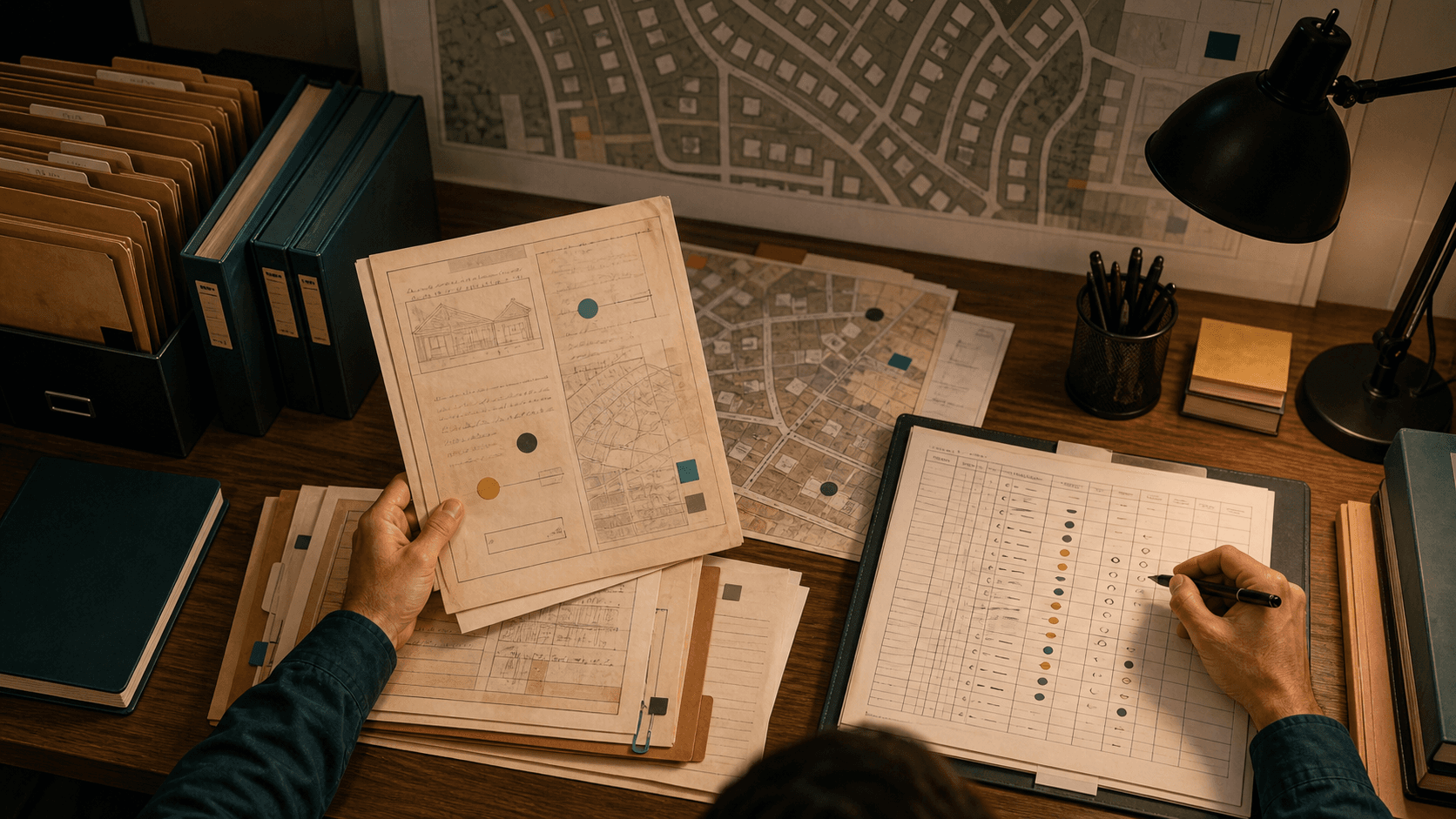
Use a match table with one row per source and columns for identifier, address or lot, make and model, date, issuer, jurisdiction, and confidence note. Exact agreement across two fields is not automatically proof if the documents were copied from each other. A serial number paired with a different address may signal a move, a data-entry error, or a second unit. Record the discrepancy rather than selecting the more convenient value.
Dates also need meaning. A permit issue date is not necessarily the installation date. A title transaction date is not necessarily occupancy. A document upload date is not the date the underlying event occurred. The research record should label each date by what it represents and preserve uncertainty when the source does not say.
Boundaries around sensitive decisions
Ownership, lien status, tax treatment, installation compliance, and eligibility can carry legal or financial consequences. Route those questions to the relevant state office, local authority, licensed professional, attorney, lender, or other qualified decision-maker. Do not expose personal information in a public article or use a research match as a public claim about a resident.
The best operational note is often a handoff: “The serial number matches the label image, but the permit address differs from the current lot record. Confirm movement history with the issuing authority before relying on the match.” This is more useful than a binary pass that hides the gap.
Review cadence and handoff
When a match is unresolved, the next action should name the source owner and the missing field rather than asking a general search question. Preserve a copy or reference according to the applicable retention and privacy rules, and note whether a later document superseded an earlier one. Periodic review can identify repeated discrepancies in lot numbers, address formatting, or serial transcription. Those patterns may improve the internal intake form, but they still do not convert a clerical pattern into a legal conclusion. A disciplined handoff keeps the record useful to the person with authority to decide.
An evidence register can distinguish a source that was requested from one that was received and reviewed. That prevents an unanswered records request from appearing complete. Keep a reason for each confidence label, such as exact identifier match, partial address match, or unresolved discrepancy. If the record may be used in a sale, financing, tax, or compliance decision, route it for specialist review instead of presenting the researcher as the decision-maker.
For every unresolved match, retain the question that would close the gap: confirm an identifier, locate a missing permit, explain an address change, or identify the correct jurisdiction. A later reviewer can then act without repeating the entire search. If no authoritative source can resolve it, label the record as unresolved and preserve the reasons. That is a legitimate research result, not a failure of the routine.
Limitations and conclusion
Public systems differ by state, age, retention period, terminology, and access. Older homes may have incomplete records. Scans may be illegible. A park's internal ledger may be accurate for operations while not proving a legal fact. This method cannot resolve missing records or establish a title, permit, or compliance outcome.
The evidence-led conclusion is that trustworthy manufactured-home research is a provenance problem before it is a search problem. MobileHomeBiz can support better routines by defining the identity question, retaining source context, distinguishing dates, and escalating consequential conclusions. A record is strong when another reviewer can see how the match was made and where the evidence stops.