Research

Mobile Home Park Tree-Risk Records: How Can an Operator Separate Observation from Hazard Judgment?

A research method for documenting trees near homes, roads, and utilities while keeping arboricultural and insurance conclusions with qualified reviewers.

MobileHomeBiz Research Desk8 minutes read5 sources citedVerified 2026-08-18
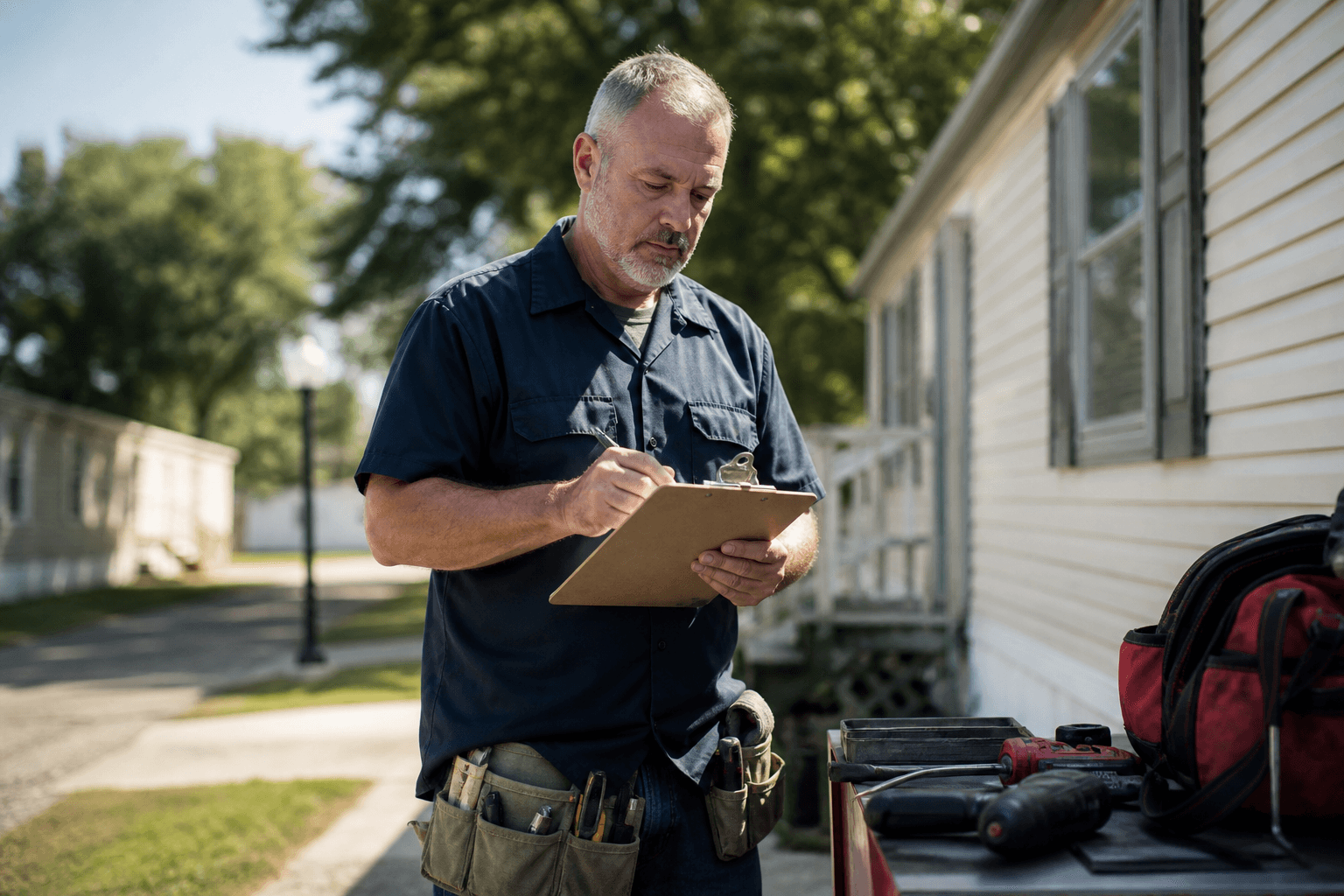
Mobile Home Park Tree-Risk Records: How Can an Operator Separate Observation from Hazard Judgment? research illustration
Key finding: A tree inventory records location and condition observations; it does not by itself establish a failure probability or liability outcome.

Key takeaways

  • Map the tree and nearby exposure.
  • Use repeatable observation language.
  • Escalate suspected hazards to an arborist or responsible professional.

Research question

What does a useful tree-risk record look like in a manufactured housing community where trees may stand beside homes, roads, overhead utilities, and shared recreation areas? The research answer is a location-specific observation plus an exposure description, not a casual diagnosis. “Large limb over the north sidewalk” is a useful trigger. “Dangerous tree” is a conclusion that may require an arborist, municipal rule review, or insurer conversation.

Method and source scope

The method reviews the U.S. Forest Service urban-forest material, OSHA walking-working-surface guidance, FEMA wind and storm preparedness, the International Society of Arboriculture consumer material, and HUD manufactured-housing resources. These sources explain why location, exposure, weather, access, and qualified inspection matter. They do not determine the risk of one tree or the liability of one park.

Record tree or area identifier, approximate location, nearby home or road, observer, date, visible condition, recent weather, photographs, and immediate control. Do not ask a resident or assistant to climb, cut, measure structurally, or approach a dangerous limb. A virtual assistant can check that a report has a location and owner, group duplicate reports, and schedule a professional review.

From observation to priority

Priority should reflect exposure and urgency, not only tree size. A fallen branch blocking emergency access may need immediate control. A leaning tree away from occupied areas may still require review but not the same response. Utility contact, road closure, resident notice, and contractor selection belong to the responsible owner or professional. Keep the reason for the priority in the record so the next reviewer can challenge or confirm it.

Weather data provides context, not causation. A wind advisory does not prove that a limb was defective, and a calm day does not prove that a tree is safe. Preserve before-and-after photographs when available. If a dispute or claim may arise, keep originals, access records, and the professional’s report separate from administrative summaries.

Conclusion

Tree research becomes actionable when it identifies the exposure, preserves the observation, records the temporary control, and routes technical judgment to a qualified reviewer. Forest Service, OSHA, FEMA, ISA, and HUD resources help MobileHomeBiz readers understand scope without inventing a property conclusion. The result is a safer queue and a more honest article.

Repeat observations

One inspection is a snapshot. A repeat record can show whether a visible condition changed after wind, rain, pruning, construction, or soil movement. It still does not replace an arborist’s evaluation. Use the same location reference and photograph direction when practical, and record the weather and access conditions. If the observer cannot safely approach, state that limitation rather than seeking a closer image.

The owner’s queue should distinguish urgent control, professional inspection, routine pruning, resident communication, and monitoring. A tree near a utility may require coordination with the utility; a tree near a home may implicate a resident conversation; a tree on a public edge may involve a municipality. Those are different owners and different permissions. Clear routing is the operational finding this research can support.

Communication and privacy

Tree reports often involve a particular home or resident concern. Share the minimum location needed for the person taking action, and avoid publishing photographs that expose a resident’s belongings or identity. Tell residents what is being inspected and what is not. If a branch blocks access, use a temporary control only when authorized and safe; do not ask an unqualified person to perform cutting or climbing.

At closeout, state whether the record documents an observation, a professional finding, a completed control, or a monitoring plan. Those labels preserve the evidence boundary. A public article can explain the workflow and link authoritative sources while avoiding an unsupported claim about a specific tree, property, insurer, or municipal responsibility.

Seasonal review

A calendar can remind an operator to revisit trees after storms, construction, drought, or seasonal leaf change, but a calendar is not an inspection. Use it to open a review row with the last observation, current exposure, and responsible owner. If the condition is unchanged, retain that observation. If it changed, link the new photograph or professional report. A transparent sequence makes it easier to decide whether monitoring remains appropriate.

The public research boundary

The article can teach readers to document exposure, location, time, weather, and professional review. It should not name a resident or imply that a general tree resource determines liability at one property. If an image is used, remove private details and explain what the image can and cannot show. This keeps educational SEO useful without turning a local observation into an unsupported case claim.

Record language

Use “observed,” “reported,” “professionally assessed,” and “controlled” as separate states. A scheduled visit is not an assessment, and a completed cut is not proof that every exposure is resolved. This small vocabulary makes the maintenance queue readable to an owner and keeps a public article from making an unsupported safety claim.

Review cadence

Keep a dated follow-up even when no new condition is found. “No change observed” is different from “not inspected.” That distinction tells the next owner whether the item was monitored, missed, or professionally cleared. It also gives readers a practical way to maintain a property record without claiming that a routine schedule predicts tree behavior.

That boundary is the evidence-led conclusion: a record can improve routing and continuity without becoming a hazard certification.

Sources

  1. U.S. Forest Service urban forests
  2. OSHA walking-working surfaces
  3. FEMA high winds
  4. International Society of Arboriculture
  5. HUD manufactured housing